Greg Chappell: The Mastermind of Australian Cricket
Greg Chappell, one of the most illustrious names in the history of Australian cricket, had a career that spanned more than a decade and left an indelible mark on the game. His technical prowess, leadership qualities, and ability to play under pressure made him one of the finest cricketers to have ever graced the sport. This article delves into Greg Chappell’s career, his contributions to Australian cricket, his leadership skills, controversies, and legacy.
Early Life and Entry into Cricket
Gregory Stephen Chappell was born on August 7, 1948, in Unley, South Australia, into a cricketing family. His father, Victor Chappell, was an amateur cricketer who instilled a love for the game in his children. Greg, along with his brothers Ian and Trevor, was introduced to the sport at an early age, and their natural aptitude for the game soon became evident.
Greg's career trajectory was shaped by his schooling at Unley High School, where he became known for his all-around cricketing abilities. He honed his skills in local clubs and was soon picked for the South Australian state team. Greg's initial years in cricket were spent under the guidance of his older brother Ian Chappell, who had already made a name for himself in Australian cricket. This family connection to cricket would prove to be vital for Greg’s progression into the national team.
Domestic Cricket and Early Success
Before making his mark in international cricket, Greg Chappell had a stellar career in domestic cricket. He debuted for South Australia in 1966 and immediately displayed his technical brilliance and temperament. His ability to score runs under pressure became evident during these early years, and he quickly established himself as a batsman capable of excelling at the highest levels.
Chappell’s performances in domestic cricket did not go unnoticed. In 1969, at the age of 21, Greg made his debut for the Australian national team in a One-Day International (ODI) against England. While he did not have an immediate breakthrough in this format, his technical skills, composed batting style, and knack for playing under pressure were becoming clear. It was only a matter of time before Greg would be a regular fixture in the Australian team.
International Cricket Career
Test Debut and Early Years (1970-1975)
Greg Chappell’s Test debut came in 1970, when he was selected to play against the West Indies. He made an immediate impact by scoring an elegant 108 runs, marking the beginning of what would be a remarkable career. His debut century was a testament to his ability to perform under pressure, and it set the stage for a career defined by consistency, elegance, and unflinching resolve.
Over the next few years, Chappell established himself as one of Australia’s most reliable batsmen. In 1971, he scored another memorable century against England at Lord’s, a ground where many great players had faltered. His performances in the 1970s were instrumental in shaping the Australian batting lineup, which was otherwise dominated by names like Doug Walters and Ian Chappell, his elder brother.
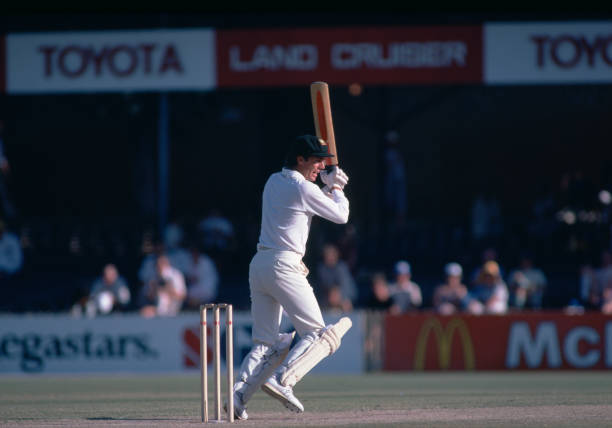
Chappell’s composure and elegance on the field became his trademarks. His technique, particularly his ability to play the ball late and under control, was admired by experts. As a middle-order batsman, he adapted his game to different conditions and often anchored the Australian innings, playing vital knocks in tough situations. However, it wasn’t just his batting that made him a standout figure; Chappell's leadership qualities and his cricketing acumen were starting to shine.
Leadership and Captaincy (1975-1984)
In 1975, Greg Chappell was appointed the captain of the Australian team, taking over from his older brother Ian Chappell, who had led the team for a number of years. His leadership style was marked by a more thoughtful, strategic approach, although he was not as abrasive as his brother. Under Greg's captaincy, Australia went through a series of changes, both in terms of players and leadership philosophy.
Chappell was instrumental in shaping a team that was known for its aggression, but he also emphasized the importance of discipline and team unity. His leadership saw Australia dominate a number of series and set new standards for success. Under his captaincy, the team achieved significant victories, including their series win against England in 1978-79, and their dominant performance in the 1980-81 Ashes series, where Australia took control of the series after a long period of English dominance.
Chappell’s leadership was not without controversy, though. One of the most notable incidents occurred in 1981 when he controversially underarm bowled to New Zealand’s Brian McKechnie during the final over of a One-Day International. The incident sparked a massive outcry in the cricketing world, and Chappell’s decision has been widely criticized ever since. While he defended the action at the time, the underarm bowling incident remains one of the darkest moments of his leadership.
Despite this, Chappell’s captaincy and his leadership skills were otherwise largely praised. His ability to maintain team discipline, handle high-pressure situations, and make tactical decisions were qualities that made him one of Australia’s most respected captains.
Batting Prowess and Records
Greg Chappell’s batting achievements during his career were impressive and well respected. He was known for his consistency, elegant stroke play, and ability to adapt his game to any format of the game. By the time he retired from Test cricket, Greg had scored over 7,000 runs at an average of 53, including 14 centuries and 34 half-centuries.
His technique was one of the finest seen in Australian cricket, and his batting style made him a formidable opponent for bowlers across the world. He was particularly known for his footwork and the way he could play both fast and spin bowling with ease. His performances in Australia and overseas were consistently solid, and he became one of the pillars of the Australian middle-order.
Chappell’s ability to score runs in all conditions was reflected in his impressive overseas records. Whether playing in the challenging conditions of the West Indies or facing the spin-heavy attacks in India, Greg was consistently among the top run-scorers for Australia.
Chappell’s most famous batting performance came in the 1983 Ashes series, where he played a series of match-winning innings, leading Australia to a crucial win and further cementing his reputation as one of the best batsmen of his era.
Retirement and Legacy
Greg Chappell retired from international cricket in 1984, ending an illustrious career that spanned more than a decade. He played his final Test match against the West Indies in 1984, ending his career as one of Australia’s most successful batsmen and captains. By the time he retired, Chappell had achieved much in his career and left behind a legacy that would influence future generations of cricketers.
Even after retirement, Chappell remained an influential figure in the world of cricket. He served as a coach for the Indian national team during the early 2000s, although his tenure was cut short due to various controversies. Nonetheless, his contribution to Australian cricket continued through his insights, commentary, and as an elder statesman of the sport.
Chappell’s Impact on Australian Cricket
Greg Chappell’s legacy in Australian cricket is far-reaching. As a batsman, he set the standard for consistency, elegance, and adaptability. His contributions to Australian cricket as a captain were immense, particularly in the way he shaped the team’s competitive spirit. He played a pivotal role in the evolution of Australian cricket, pushing the team to be more aggressive and more disciplined.
His career, while marked by controversies, showcased his resilience and determination to succeed at the highest level. Through his hard work, dedication, and performances, Greg Chappell earned a place among the cricketing greats of the 20th century.
Conclusion
Greg Chappell is a name that will forever be associated with Australian cricket. His remarkable batting prowess, leadership qualities, and immense contribution to the game have left an indelible mark on the sport. Though his career was not without controversies, Chappell’s legacy as a batsman, captain, and ambassador of the game remains intact. As cricket continues to evolve, Greg Chappell’s influence on Australian cricket and world cricket at large will always be remembered and revered.
Greg Chappell: The Mastermind of Australian Cricket


Welcome to Cricketkand.com! We are dedicated to providing cricket enthusiasts with the latest news, updates, and insights gathered from top cricket websites around the world. Our goal is to keep you informed about all things cricket, offering up-to-date information from trusted sources including well-known cricket websites, news outlets, and social media platforms.
Cricketkand.com does not directly produce or manage the cricket content featured on our site. All cricket information is curated from various third-party sources that are recognized in the cricket community. We strive to provide accurate and timely content; however, we are not responsible for any errors, omissions, or changes in the information provided by third-party sources.
By using our website, you acknowledge and accept the above terms and conditions. Thank you for visiting Cricketkand.com, and we hope you enjoy staying up-to-date with the world of cricket!
For any inquiries or to raise a complaint, please contact us at officialcricketkand@gmail.com