Harbhajan Singh: The Turbanator and His Heritage in Indian Cricket
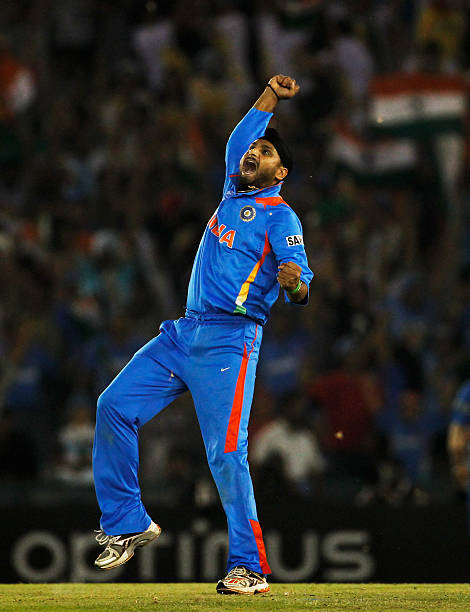
Harbhajan Singh, tenderly known as "The Turbanator," is one of the most famous cricketers to have addressed India. An expert of off-turn bowling, Harbhajan's commitment to Indian cricket, particularly as twist bowling, has been gigantic. He was a critical figure in India's cricketing renaissance in the last part of the 1990s and mid-2000s. With his sharp turn, flight, and brazen disposition, Harbhajan has conveyed probably the most significant crossroads in Indian cricket history. This article dives into Harbhajan Singh's profession, from his initial a long time to his ascent as quite possibly of the best spinner in world cricket.
Harbhajan Singh was brought into the world on July 3, 1980, in Jalandhar, Punjab, India, into a family with no cricketing foundation. His affection for cricket started very early on. Harbhajan was at first leaned towards quick bowling, yet under the mentorship of his mentor, Charanjit Singh, he did a fruitful change to off-turn. This progress was a critical second in his vocation, and it before long turned out to be evident that Harbhajan had the right skills expected to excel at off-turn bowling.
His initial cricketing days saw him playing in the Punjab Ranji Trophy group, where his exhibitions grabbed the eye of public selectors. His capacity to turn the ball strongly, joined with his forceful disposition, made him stick out. By 1997, Harbhajan had sufficiently dazzled to be chosen for the Indian team, making his presentation in the Test series against Australia in 1998.
Harbhajan made his Test debut for India against Australia in 1998 in Chennai, a match that would check the start of his profession as quite possibly of India's best spinner. His exhibition was a long way from phenomenal in his initial appearances, however it was his assurance and eagerness to discover that permitted him to ascend through the positions rapidly.
It was his presentation in the 1998-99 series against the West Indies that hardened his position in the Indian group. Harbhajan's lady five-wicket pull came in 2001 during the well known India versus Australia Test series, which solidified his standing as a deadly off-spinner. He asserted 7 wickets for 123 runs in that game, demonstrating his capacity to prevail with regards to testing conditions.
Harbhajan's vital turning point came in 2001, during India's noteworthy Test series triumph against Australia. After India experienced a weighty loss in the main Test, Harbhajan turned the series on its head with a remarkable exhibition. In the second Test in Kolkata, Harbhajan turned into the main Indian bowler to take a hat-trick in a Test match. His three wickets in three back to back conveyances during that match paralyzed the cricketing scene, and from that second, Harbhajan was immovably settled as India's head spinner.
He completed the series with 32 wickets, including his extraordinary full go-around, and assumed a vital part in India's notable win over the Aussies. This triumph stays perhaps of the main second in Indian cricket, and Harbhajan's commitment was significant in India's ascent as a predominant power in world cricket.
Harbhajan Singh's twist bowling was characterized by his capacity to grant tremendous turn ready, as well as his varieties, including the doosra (a conveyance that gets some distance from the right-hander). He was known for his going after approach, frequently bowling with a flighted direction and endeavoring to misdirect batsmen with his sharp turn and bob. His off-breaks would frequently pitch outside the off-stump and turn strongly, catching numerous a batsman before the stumps or getting them captured behind.
His dominance of the specialty of off-turn permitted him to flourish in different circumstances, including the dry and dusty wickets of India, as well as abroad. His range of abilities made him an important resource for the Indian group in both Test and restricted overs designs.
In limited-overs cricket, Harbhajan Singh was similarly viable. His control, capacity to bowl in the center overs, and skill for breaking organizations made him a central member for India. He assumed a fundamental part in India's 2007 ICC World Twenty20 victory, where his accomplished off-twist and capacity to bowl in the tension minutes assisted India with winning the debut T20 World Cup.
The following significant achievement in Harbhajan's restricted overs profession came in 2011, when he was a pivotal individual from the Indian group that prevailed in the ICC Cricket World Cup. Harbhajan's job in the competition was fundamental, as he furnished offset to the group with his bowling in the center overs, guaranteeing that the resistance never fabricated critical organizations. However he didn't bowl as much in the last, his wickets in prior phases of the opposition were critical to India's prosperity. Harbhajan finished the World Cup with 9 wickets in 7 matches, and his experience demonstrated priceless as India lifted the prize without precedent for 28 years.
All through his vocation, Harbhajan has been associated with a few critical competitions. His most outstanding contention was with Shane Warne, the Australian leg-spinner, broadly viewed as perhaps of the best bowler in cricket history. The two players frequently vied for the title of the best spinner in world cricket, and their fights on the field made many entrancing challenges. Nonetheless, it was Harbhajan's capacity to adjust to various circumstances and bowl reliably that put him aside from a large number of his peers.
One more of Harbhajan's striking competitions was with Pakistan, particularly in the high-profile experiences against Shahid Afridi. The matches among India and Pakistan were dependably extreme, and Harbhajan assumed a vital part in these games, contributing with both bat and ball. One of his most paramount minutes came during the 2004 Test series against Pakistan, where his tight bowling, combined with his psychological durability, was necessary to India's prosperity.
Harbhajan Singh's profession traversed north of 17 years, during which he turned into a vital figure in a considerable lot of India's notable cricketing minutes. He was essential for the Indian turn quartet, close by any semblance of Anil Kumble, Srinivas Venkataraghavan, and Ravichandran Ashwin, and made imperative commitments to the Indian group's triumphs across designs. Harbhajan was one of the fundamental reasons India's spinners ruled in home circumstances and became perhaps of the best group in world cricket during the 2000s.
Over his vocation, Harbhajan amassed more than 700 wickets in worldwide cricket, making him one of the best Indian bowlers ever. He is India's third-most elevated wicket-taker in Test matches after Anil Kumble and Kapil Dev, and stays one of the most incredible spinners to at any point play for India.
In the same way as other cricketers, Harbhajan Singh confronted his reasonable portion of difficulties during his vocation, especially with wounds. Back and shoulder wounds impacted his structure during a few stages, prompting periods where he couldn't bowl at his best. Regardless of these misfortunes, Harbhajan kept up with his spot in the group because of his experience and proceeded with influence with the ball. His consistency notwithstanding injury showed his versatility and his significance to the group.
Furthermore, Harbhajan additionally confronted debates all through his vocation, especially his on-field conflicts with resistance players. Perhaps of the most prominent episode happened during the 2008 Line Gavaskar Trophy, where Harbhajan was engaged with a racial maltreatment discussion with Australian cricketer Andrew Symonds. The episode brought about a suspension for Harbhajan, which ignited public discussions and prompted a more extensive conversation on bigotry in cricket. Notwithstanding this, Harbhajan figured out how to hold the trust of his colleagues and selectors and kept on being a piece of India's tip top bowling bunch.
Harbhajan Singh declared his retirement from Test cricket in 2013, finishing a period of off-turn mastery for India. His inheritance in Indian cricket is significant, as he was one of the critical figures in the advancement of Indian twist bowling. His commitments to the Indian group in the two Tests and restricted overs cricket, including the famous 2001 Test series against Australia and the 2011 World Cup triumph, concrete his place as quite possibly of India's most prominent cricketer.
Post-retirement, Harbhajan stayed engaged with the game, changing to a job as a guide and reporter. He likewise played in the Indian Chief Association (IPL), where he addressed the Mumbai Indians for a long time and later joined the Kolkata Knight Riders. His administration and involvement with the IPL helped guide youthful cricketers, and he stayed a regarded figure inside the establishment framework.
Harbhajan Singh's record and accomplishments in global cricket are striking:
Harbhajan Singh's vocation is a demonstration of the soul of assurance, versatility, and enthusiasm for the game. From his wonderful full go-around in 2001 to assuming a key part in India's Reality Cup win in 2011, Harbhajan's journey has been one of triumph, grit, and unforgettable moments. His contribution to Indian cricket, especially in the field of off-spin bowling, has left an indelible mark. As a player, Harbhajan was both feared and admired, and his legacy will continue to inspire future generations of cricketers.
Harbhajan Singh: The Turbanator and His Heritage in Indian Cricket


Welcome to Cricketkand.com! We are dedicated to providing cricket enthusiasts with the latest news, updates, and insights gathered from top cricket websites around the world. Our goal is to keep you informed about all things cricket, offering up-to-date information from trusted sources including well-known cricket websites, news outlets, and social media platforms.
Cricketkand.com does not directly produce or manage the cricket content featured on our site. All cricket information is curated from various third-party sources that are recognized in the cricket community. We strive to provide accurate and timely content; however, we are not responsible for any errors, omissions, or changes in the information provided by third-party sources.
By using our website, you acknowledge and accept the above terms and conditions. Thank you for visiting Cricketkand.com, and we hope you enjoy staying up-to-date with the world of cricket!
For any inquiries or to raise a complaint, please contact us at officialcricketkand@gmail.com