Ian Chappell: A Cricketing Symbol and Progressive Captain
Ian Chappell, an Australian cricket legend, is broadly viewed as quite possibly of the best batsman and skippers throughout the entire existence of the game. His profession, crossing more than 10 years, denoted a time of change for Australian cricket. With his forceful playing style, sharp cricketing astuteness, and furiously serious nature, Chappell became one of the most notorious figures of his time. This article investigates Ian Chappell's cricketing history, from his initial starting points to his exceptional worldwide vocation, authority, and enduring effect on the game.
Ian Michael Chappell was brought into the world on September 26, 1943, in Adelaide, South Australia. Naturally introduced to a cricketing family, Chappell was acquainted with the game by his dad, who played for South Australia, and his sibling, Greg Chappell, who might likewise proceed to become quite possibly of Australia's most famous cricketer. Ian's openness to the game since the beginning molded his energy and want to become famous in the realm of cricket.
Chappell went to St. Peter's School in Adelaide, where he succeeded at cricket and was known for his forceful playing style. His abilities immediately earned respect, and in 1961, at 18 years old, he made his presentation for South Australia in homegrown cricket. His initial exhibitions in the homegrown circuit were noteworthy, and he before long laid down a good foundation for himself as a top-request batsman with the capacity to play under tension.
Chappell's ability to cricket was supplemented by his excellent handling abilities. His regular physicality and sharp reflexes made him perhaps of the best defender in Australian cricket, a quality that would be fundamental to his general game. Chappell's change from homegrown to worldwide cricket was quick, and he was before long called up to address Australia in Test cricket.
Ian Chappell made his Test debut for Australia in 1964 at 20 years old, during a series against the West Indies. He was at first a lower-center request batsman and didn't have a massive effect in his initial matches. In any case, it was obvious from the beginning that Chappell had serious areas of strength for an and a resolute assurance to prevail at the most significant level.
His most memorable huge advancement came in 1966, when he scored his lady Test century against the West Indies in Melbourne. This innings denoted the start of Chappell's ascent as one of Australia's top batsmen. His forceful playing style, joined with his capacity to play in troublesome circumstances, before long made him a pillar in the Australian setup. By the last part of the 1960s, Chappell had solidly set up a good foundation for himself as quite possibly of the best batsman in world cricket.
Chappell's initial years were characterized by his versatility and his capacity to play earnestly. In spite of various testing series, he kept on performing reliably, frequently playing game dominating innings for Australia. His exhibitions were especially important in the 1968 Remains series, where he assumed an imperative part in Australia's triumph, scoring urgent goes against the English bowlers.
In 1971, Ian Chappell was designated the chief of the Australian public cricket crew, taking over from the unbelievable Richie Benaud. Chappell's arrangement denoted the start of another time for Australian cricket. He was known for his forceful and courageous methodology, both as a batsman and as a pioneer. His initiative style was progressive, moving Australian cricket towards a more unique and serious mentality.
Chappell's captaincy was portrayed by his straightforward methodology and his refusal to acknowledge unremarkableness. He was a firm devotee to the idea of forceful cricket, frequently pushing his group to play with a going after mentality. Under his authority, Australia became quite possibly of the most imposing group in world cricket, and Chappell's accentuation on difficult work, wellness, and mental strength set the establishment for future Australian groups.
His authority was not without debate. One of the most remarkable occurrences during Chappell's captaincy was his quarrel with the Australian board and the players' association over issues like player government assistance and group the executives. In spite of these difficulties, Chappell stayed an unflinching and compelling pioneer, continuously focusing on the prosperity of his group and his obligation to serious cricket.
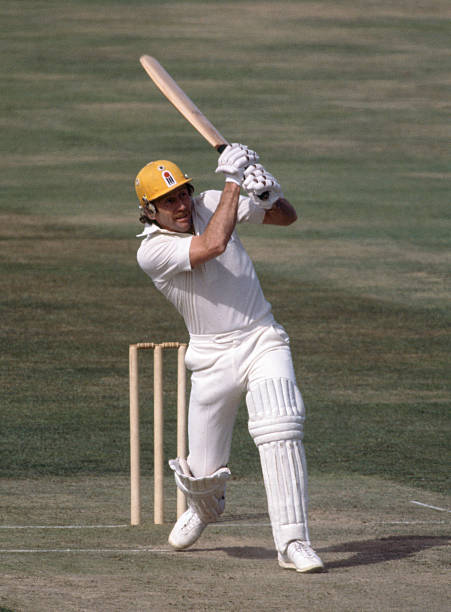
Ian Chappell's forceful batting style was one of the characterizing elements of his cricketing persona. He was known for his striking and dauntless methodology at the wrinkle, continuously hoping to overwhelm the bowlers and take the game to the resistance. Chappell's capacity to play both quick and twist bowling easily was a demonstration of his flexibility and cricketing knowledge.
His method was set apart by areas of strength for him, fast reflexes, and a capacity to peruse the game. Chappell's bat speed and power permitted him to play the ball with power, and he could undoubtedly turn the game in support of Australia with his going after play. He had a propensity for playing enormous innings under tension, and his exhibitions frequently came at urgent minutes when the group required him most.
Chappell's batting accomplishments were uncommon. He scored north of 5,000 runs in Test cricket at a normal of more than 40, including 14 centuries and 23 half-hundreds of years. His capacity to score runs in both home and away circumstances made him a steady and dependable batsman for Australia. He played a few significant innings during his vocation, including his game dominating thump of 174 against the West Indies in 1975, which stays one of the most notorious exhibitions of his profession.
Chappell's strength over both quick and twist bowlers was apparent in his record against driving bowlers of his time. He succeeded in the difficult states of the West Indies, where he confronted probably the fiercest quick bowlers ever, including the amazing West Indian group of four of Roberts, Holding, Accumulate, and Croft. Regardless of the strain, Chappell's forceful and positive methodology permitted him to prevail against the absolute best bowlers on the planet.
The 1975 World Cup was an achievement throughout the entire existence of One-Day Global (ODI) cricket, and Ian Chappell's administration assumed a critical part in Australia's exhibition in the competition. In spite of the fact that Australia didn't win the World Cup, they arose as perhaps of the most grounded group in the opposition, and Chappell's authority was instrumental in forming the group's forceful and dauntless way to deal with ODI cricket.
Chappell's strategic sharpness in the 1975 World Cup, including his forceful batting and field positions, exhibited how he might interpret the developing elements of restricted overs cricket. He was quite possibly the earliest chief to perceive the significance of a going after approach in ODIs, which would later impact the advancement of forceful cricket across the globe.
One of the most dubious snapshots of Ian Chappell's profession came during the 1981 ODI series against New Zealand. The scandalous "underarm bowling episode," in which Chappell's more youthful sibling Greg Chappell requested the Australian bowler Trevor Chappell to bowl underarm to keep New Zealand from hitting a six to tie the match, stays quite possibly of the most discussed activity in cricket history.
In spite of the fact that Ian Chappell was not straightforwardly associated with the occurrence, it happened under his captaincy and has perpetually been related with his authority. While the choice was viewed as unsporting and exploitative by a larger number of people, it stays a piece of Chappell's intricate inheritance.
Notwithstanding this discussion, Ian Chappell's heritage as a chief is to a great extent sure. He is credited with molding the cutting edge period of Australian cricket, setting the establishments for the group's progress during the 1980s and then some. His forceful style of play, strategic developments, and eagerness to rock the boat made him a progressive figure in the game.
Subsequent to resigning from global cricket in 1984, Ian Chappell stayed a vital figure in the cricketing scene. He turned into a famous reporter, furnishing experiences into the game with his sharp examination and cricketing mastery. His profound comprehension of the game and his capacity to explain his considerations made him perhaps of the most regarded voice in cricket critique.
Chappell likewise proceeded with his relationship with cricket organization, working with different cricket sheets and associations. He was associated with advancing the game and pushing for changes to work on its worldwide reach and player government assistance.
Ian Chappell's profession and heritage are inseparable from the change of Australian cricket into a predominant power in world cricket. As a player, his forceful batting, initiative, and cricketing knowledge set new guidelines for Australian cricket. His accentuation on forceful cricket and a serious soul keeps on impacting ages of cricketers.
Regardless of discussions and difficulties, Ian Chappell's commitments to the game are evident. He stays a famous figure in Australian cricket and a critical engineer of the current progress of Australian cricket, both as a player and as a pioneer. Through his responsibility, enthusiasm, and vision, Ian Chappell's heritage keeps on rousing cricketers all over the planet.
This is the aligned version of the content you provided. If you need any further modifications or adjustments, feel free to let me know!
Ian Chappell: A Cricketing Symbol and Progressive Captain



Welcome to Cricketkand.com! We are dedicated to providing cricket enthusiasts with the latest news, updates, and insights gathered from top cricket websites around the world. Our goal is to keep you informed about all things cricket, offering up-to-date information from trusted sources including well-known cricket websites, news outlets, and social media platforms.
Cricketkand.com does not directly produce or manage the cricket content featured on our site. All cricket information is curated from various third-party sources that are recognized in the cricket community. We strive to provide accurate and timely content; however, we are not responsible for any errors, omissions, or changes in the information provided by third-party sources.
By using our website, you acknowledge and accept the above terms and conditions. Thank you for visiting Cricketkand.com, and we hope you enjoy staying up-to-date with the world of cricket!
For any inquiries or to raise a complaint, please contact us at officialcricketkand@gmail.com