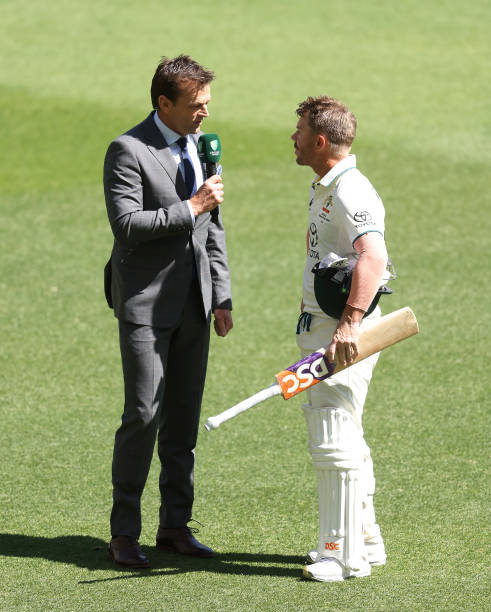
Title: Adam Gilchrist: Altering the Job of Wicketkeeper-Batsman in World Cricket
Introduction
In the pantheon of cricketing greats, barely any names reverberate with as much importance as Adam Gilchrist. Broadly viewed as one of the best wicketkeeper-batsmen throughout the entire existence of cricket, Gilchrist's vocation was characterized by his capacity to at the same time succeed behind the stumps and with the bat. Known for his dangerous batting style, his daring way to deal with the game, and his administration on the field, Gilchrist was instrumental in reshaping the job of a wicketkeeper in present day cricket. He was a central member in Australia's strength in world cricket during the last part of the 1990s and mid 2000s.
With a vocation crossing north of 13 years in worldwide cricket, Adam Gilchrist made a permanent imprint on the game, procuring various records, honors, and a standing as one of the most mind-blowing players to at any point elegance the field. This article digs profound into Gilchrist's cricketing venture, inspecting his batting brightness, wicketkeeping ability, administration characteristics, and inheritance that keeps on affecting the game today.
Adam Craig Gilchrist was brought into the world on November 14, 1971, in Bellingen, New South Ribs, Australia. Brought up in a wearing family, Gilchrist's initial openness to cricket got through his dad, who was an excited cricketer himself. Gilchrist's athletic ability was obvious right off the bat, as he succeeded in a few games, yet cricket before long turned into his enthusiasm.
Gilchrist went to Coffs Harbor Secondary School and played his initial cricket with the North Coast Cricket Club. His leading edge second came when he addressed New South Grains at the under-17 and under-19 levels. Gilchrist's normal ability as a batsman and wicketkeeper started to arise during these early years, and it was clear he was a player bound for more prominent things.
Gilchrist's ascent to the Australian public cricket crew was continuous yet consistent. He made his presentation for New South Ridges in 1992-93, and immediately laid down a good foundation for himself as a customary player. His exhibitions in homegrown cricket procured him a spot in the Australian crew for the 1996 Cricket World Cup. Notwithstanding, his huge break came in 1996 when he was called up as a reinforcement wicketkeeper for the public group.
Gilchrist's chance to secure himself as the best option wicketkeeper came in 1999, when he was given the gloves for Australia during the Test series against Pakistan. Before this, the incredible Ian Healy had been Australia's wicketkeeper for more than 10 years. Many accepted that supplanting Healy would be a difficult task, yet Gilchrist's exhibitions immediately hushed the pundits.
Adam Gilchrist was an outstanding wicketkeeper, an expertise that frequently slipped by everyone's notice because of the sheer splendor of his batting. Notwithstanding, when one investigates his profession behind the stumps, obviously he was one of the most solid wicketkeepers in world cricket.
Gilchrist's glove work was portrayed by his fast reflexes, sharp concentration, and smoothness under tension. He reliably kept an elevated degree of execution, whether confronting the stumps or taking gets from quick bowlers. His capacity to influence befuddling excusals, take troublesome gets, and produce lightning-quick stumpings turned into a sign of his vocation. His speedy hands and capacity to expect the bowler's conveyances conveyed him a consistent intimidation to resistance batsmen.
His best wicketkeeping execution came in 2006, when he accomplished a profession high 472 excusals across all configurations, a record that further hardened his place as one of the best wicketkeepers throughout the entire existence of the game.
While Gilchrist's wicketkeeping abilities were eminent, it was his batting that made him an easily recognized name in world cricket. Gilchrist was a brave, going after batsman with the capacity to steer a match in an issue of overs. He turned into the model of another age of wicketkeeper-batsmen, joining the customary obligations of wicketkeeping with the cutting edge prerequisite for hazardous batting.
His batting style was forceful and frequently horrendous, especially in restricted overs cricket. Gilchrist's capacity to take on the best bowlers on the planet from the absolute first ball made him a hazardous suggestion for resistance groups. His bravery, joined with his capacity to play a scope of shots across the ground, made him a distinct advantage.
One of the vital crossroads of Gilchrist's profession came in the 2007 ICC World Cup last against Sri Lanka. Gilchrist played an extraordinary thump of 149 runs from only 104 balls, a showcase of batting splendor that fueled Australia to an agreeable triumph. His thump On the planet Cup last is generally viewed as quite possibly of the best inning at any point played in a World Cup last, and it was only one illustration of his capacity to perform on the greatest stage.
In Test cricket, Gilchrist was similarly compelling, with his forceful yet determined way to deal with batting. He held the record for the most Test hundreds of years by a wicketkeeper, with 17 centuries to his name, a demonstration of his extraordinary capacity with the bat. His quick moving innings, combined with his capacity to change gears when fundamental, guaranteed that he was a wicketkeeper as well as an imposing batsman too.
Notwithstanding his abilities as a wicketkeeper and batsman, Gilchrist was likewise a regarded pioneer. While he was never a standard Test chief, he assumed control over the captaincy of the Australian group on a few events during the shortfall of Ricky Ponting. His administration characteristics were clear as he drove the group to progress in a few key matches, including a notable 5-0 Cinders whitewash of Britain in 2006-07.
Gilchrist's initiative style was set apart by his quiet attitude and capacity to show others how its done. He was never a skipper who depended on yelling or threatening his players; rather, he established a climate of common regard and trust. His own exhibitions, especially his forceful batting and splendid wicketkeeping, roused his partners to perform at their best.
His authority arrived at its pinnacle during the 2007 ICC World Cup, where he assumed a critical part in Australia's predominant mission. Under his administration, Australia turned into the main group in history to win three back to back World Cups, further establishing his status as a cricketing perfect.
Adam Gilchrist reported his retirement from global cricket in 2008, stopping a sparkling profession that had seen him rule the game across all organizations. His last Test series was against India in 2008, where he captained the group without Ricky Ponting. Gilchrist's retirement denoted the conclusion of an important time period for Australian cricket, as he was the last player from Australia's extraordinary 2000s group to move back from the worldwide game.
Gilchrist's heritage is enormous, and his effect on the game is as yet felt today. He reformed the job of the wicketkeeper-batsman, giving an outline to people in the future to follow. His bold way to deal with batting, joined with his unwavering quality behind the stumps, set another norm for wicketkeepers in current cricket. Gilchrist was a good example for yearning players, showing that succeeding in the two parts of the game was conceivable.
Past measurements and records, Gilchrist's impact is best summarized by the regard he orders in the cricketing scene. He was known for his sportsmanship, modesty, and obligation to the game, making him perhaps of the most regarded figure in the game's set of experiences.
All through his profession, Gilchrist set various standards and accomplished a progression of momentous accomplishments. A portion of his most striking records include:
Adam Gilchrist's cricketing venture is one of remarkable achievement, advancement, and impact. His commitments to the game, both as a wicketkeeper and as a batsman, have passed on an enduring heritage that will keep on motivating people in the future of cricketers. Gilchrist's effect rises above simple insights; his way to deal with the game, his initiative, and his sportsmanship have made him a genuine symbol of the game. As the game keeps on developing, Adam Gilchrist's profession fills in as a sign of how one player can reform how a position is played, setting new principles and moving an age of cricketers to break new ground and rethink their jobs.
Title: Adam Gilchrist: Altering the Job of Wicketkeeper-Batsman in World Cricket






Welcome to Cricketkand.com! We are dedicated to providing cricket enthusiasts with the latest news, updates, and insights gathered from top cricket websites around the world. Our goal is to keep you informed about all things cricket, offering up-to-date information from trusted sources including well-known cricket websites, news outlets, and social media platforms.
Cricketkand.com does not directly produce or manage the cricket content featured on our site. All cricket information is curated from various third-party sources that are recognized in the cricket community. We strive to provide accurate and timely content; however, we are not responsible for any errors, omissions, or changes in the information provided by third-party sources.
By using our website, you acknowledge and accept the above terms and conditions. Thank you for visiting Cricketkand.com, and we hope you enjoy staying up-to-date with the world of cricket!
For any inquiries or to raise a complaint, please contact us at officialcricketkand@gmail.com