

Title: Ricky Ponting: A Glorious Career of Leadership and Mastery in Cricket
Introduction
Ricky Ponting is regarded as one of the greatest cricketers of all time, a player whose name is synonymous with Australian cricketing dominance. His career spanned more than two decades, during which he became one of the most successful captains in the history of the sport. Ponting’s batting prowess, sharp leadership, and competitive spirit made him a central figure in Australian cricket’s golden era in the late 1990s and early 2000s. As a batsman, he amassed over 27,000 international runs, including 71 centuries, which places him among the game's all-time greats.
Ponting's contributions to Australian cricket are immeasurable. As a captain, he led Australia to numerous successes, including two ICC Cricket World Cup victories in 2003 and 2007. His leadership, combined with his technical brilliance and aggressive attitude, made him a formidable figure on the cricket field. This article provides an in-depth analysis of Ricky Ponting's illustrious career, from his early life and rise in domestic cricket to his role as a world-renowned captain and eventual retirement.
Ricky Thomas Ponting was born on December 19, 1974, in Launceston, Tasmania, Australia. His father, Graeme Ponting, was a keen cricketer who introduced Ricky to the sport at an early age. Growing up in Tasmania, Ponting was an all-rounder, playing a variety of sports, but it was cricket that ultimately captivated him. His talent was evident from a young age, and he quickly rose through the ranks of Tasmanian cricket.
Ponting’s breakthrough came in 1992 when he was selected to represent Tasmania in the domestic competition. He was just 17 years old at the time. In 1993, Ponting made his first-class debut for Tasmania, and his performances were impressive enough to earn him a spot in the Australian U-19 team. It didn’t take long for his batting ability to attract national attention, and by 1995, Ponting was a regular fixture in Australia’s national squads.
Ponting’s international career began in 1995 when he was selected to play in the Australian national team for the West Indies tour. His debut came in a One-Day International (ODI) against the West Indies in Sydney. Although he did not make an immediate impact, his performances in domestic cricket soon spoke for themselves. In 1996, he made his Test debut against Sri Lanka at the Melbourne Cricket Ground (MCG), which marked the beginning of an illustrious career.
Ponting quickly adapted to international cricket and started making waves with his aggressive style of batting. His temperament, sharp cricketing mind, and ability to score runs in all formats of the game made him a crucial player for Australia. In the late 1990s, Australia was undergoing a transformation under the captaincy of Steve Waugh, and Ponting became a key part of the team’s success in both Test matches and ODIs.
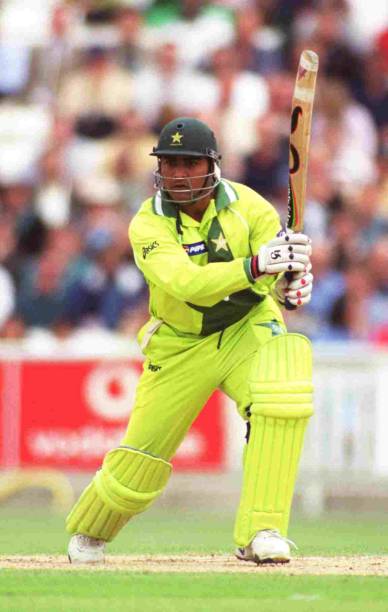
Ponting’s rise to prominence as a top-class batsman began in the late 1990s. His aggressive yet technically sound batting style made him a destructive force, capable of scoring runs in all conditions. Ponting was renowned for his cover drive, one of the most elegant and precise shots in cricket, and his ability to play both fast and spin bowling with equal proficiency.
His performances in the 1999 Cricket World Cup were a sign of things to come. Ponting was a crucial part of Australia’s success in that tournament, playing pivotal innings that helped Australia lift the trophy. In the final against Pakistan, Ponting’s 84 not out was an essential contribution to Australia’s victory. This performance solidified his place in the national team, and his career trajectory began to rise rapidly.
Ponting continued to build his reputation as one of the best batsmen in the world during the early 2000s. His performances in Test matches were equally impressive, and by 2003, he had cemented his status as one of Australia’s most reliable players. His ability to score hundreds in all conditions made him a consistent match-winner for his team. By the time the 2003 Cricket World Cup came around, Ponting had become a key figure in Australia’s dominance of world cricket.
Ricky Ponting’s leadership journey began in 2004 when he was appointed vice-captain of the Australian team under Steve Waugh. However, in 2004, following Waugh’s retirement, Ponting was handed the captaincy of the Australian cricket team. The transition was seamless, and Ponting quickly established himself as one of the best captains in the history of the game. His leadership style was aggressive, yet calm under pressure, and he had an innate ability to make the right decisions at crucial moments.
Ponting led Australia with distinction for over a decade, during which time the team became an unstoppable force in world cricket. Under his leadership, Australia dominated world cricket, achieving numerous records and victories. Ponting’s tactical brilliance, combined with his own form as a batsman, helped Australia remain the number one-ranked Test team for much of his captaincy.
Ponting’s reign as captain coincided with one of the most successful periods in Australian cricket history. Under his leadership, Australia won two consecutive ICC Cricket World Cups (2003 and 2007), dominating the limited-overs format. Ponting played key roles in both World Cup victories, with his performances in the 2003 final against India particularly noteworthy. Ponting’s 140 runs in the final, which guided Australia to a comprehensive win, remains one of the best innings in World Cup history.
In Test cricket, Ponting continued to lead by example. He played an integral role in Australia’s dominant run, which included consecutive series victories over the world’s best teams. His most famous achievement came in the 2004-2005 Ashes series, when he led Australia to a 5-0 victory over England, a feat that remains one of the proudest moments in Australian cricket.
Ponting’s performances on the field were not limited to his leadership; he was consistently one of the most prolific run-scorers in world cricket. He broke numerous records during his career, including becoming Australia’s highest run-scorer in both Test and ODI cricket. His 71 international centuries placed him among the all-time greats in the sport, and his ability to score runs under pressure made him a valuable asset in both formats.
Ponting’s career faced a few challenges towards the end of his tenure as captain. The retirement of key players, such as Glenn McGrath and Shane Warne, signaled the end of Australia’s golden era, and Ponting was faced with the difficult task of rebuilding the team. While his batting form remained strong for much of this period, Australia began to experience setbacks in both Test and ODI cricket, including losses to India and South Africa.
Despite these challenges, Ponting remained committed to the team and continued to lead with determination. However, in 2011, he stepped down as captain of the Australian team, making way for Michael Clarke to take over the role. Ponting continued to play for Australia until 2012 when he announced his retirement from all forms of international cricket.
Ponting’s final match was in the 2012 Test series against South Africa, where he played his last Test match in January. His retirement was emotional, as he had been an integral part of Australian cricket for over two decades. Ponting’s legacy was secured, and he was widely regarded as one of the best cricketers to have ever played the game.
Following his retirement from international cricket, Ponting continued to stay involved in the sport, both as a commentator and as a mentor to younger cricketers. He played in domestic cricket competitions, including the Indian Premier League (IPL), where he captained the Mumbai Indians and led them to victory in the 2015 season. Ponting also took on coaching roles, assisting the Australian national team and other teams around the world with his vast cricketing knowledge.
Ponting’s post-retirement career has seen him become a respected commentator and a figure of authority in cricketing circles. He has often been called upon to provide expert analysis, thanks to his deep understanding of the game and his sharp cricketing mind.
Ricky Ponting’s career is a testament to his skill, dedication, and leadership in the game of cricket. As a batsman, he played some of the most memorable innings in the history of the sport, and as a captain, he guided Australia to numerous triumphs on the world stage. His ability to adapt to changing conditions, his tactical acumen, and his unflinching commitment to the game made him one of the best cricketers of all time. Ponting’s influence on Australian cricket is undeniable, and his legacy will continue to inspire future generations of cricketers.
Title: Ricky Ponting: A Glorious Career of Leadership and Mastery in Cricket



Welcome to Cricketkand.com! We are dedicated to providing cricket enthusiasts with the latest news, updates, and insights gathered from top cricket websites around the world. Our goal is to keep you informed about all things cricket, offering up-to-date information from trusted sources including well-known cricket websites, news outlets, and social media platforms.
Cricketkand.com does not directly produce or manage the cricket content featured on our site. All cricket information is curated from various third-party sources that are recognized in the cricket community. We strive to provide accurate and timely content; however, we are not responsible for any errors, omissions, or changes in the information provided by third-party sources.
By using our website, you acknowledge and accept the above terms and conditions. Thank you for visiting Cricketkand.com, and we hope you enjoy staying up-to-date with the world of cricket!
For any inquiries or to raise a complaint, please contact us at officialcricketkand@gmail.com