Title: The Momentous Excursion of Ajit Agarkar: An Account of Versatility, Consistency, and Commitment to Indian Cricket
Ajit Agarkar, a name that may not necessarily overwhelm titles in Indian cricket, however one that should be recollected and treasured for his striking commitments to the game. Known for his persistence, flexibility, and capacity to contribute with both the ball and the bat, Agarkar's profession is a rousing story of steadiness, difficult work, and calm viability. His excursion through global cricket was set apart by snapshots of brightness, flexibility through difficult stretches, and essential jobs that assisted India with making progress in different arrangements. However he probably won't have gotten the boundless idolization given to a portion of his companions, Ajit Agarkar assumed a huge part in molding the Indian cricketing scene.
This article dives into Ajit Agarkar's cricketing history, following his initial life, his ascent in homegrown cricket, his global excursion, key achievements, challenges, and at last, his heritage in Indian cricket.
Ajit Raghunath Agarkar was brought into the world on April 4, 1977, in Mumbai, Maharashtra, into an unassuming family. His underlying openness to cricket got through his dad, Raghunath Agarkar, who supported his advantage in the game. Since early on, Agarkar showed a fitness for bowling, and his energy for the game developed as he leveled up his abilities in the neighborhood roads and grounds of Mumbai, a city with a profound enthusiasm for cricket.
Agarkar's initial steps into serious cricket got through the Mumbai cricket scene, which has generally been one of the most aggressive conditions for sprouting cricketers in India. He played in age-bunch competitions for Mumbai, rapidly becoming well known with his speed and his capacity to produce bob in spite of his slight framing. His capacity to bowl quick and swing the ball collected the consideration of selectors, and Agarkar's future in cricket started to come to fruition.
He transformed the homegrown circuit by playing for Mumbai in the Ranji Prize, India's chief homegrown cricket rivalry. Agarkar's exhibitions in the Ranji Prize procured him acknowledgment as perhaps of the most gifted and promising quick bowler in the nation, particularly given that he was bowling in a period when India was all the while battling to deliver predictable speed bowlers.
Ajit Agarkar's leap forward in homegrown cricket came during the 1997-98 time of the Ranji Prize. Playing for Mumbai, he exhibited his expertise with the ball and turned into a vital figure for the group. His amazing exhibitions in the homegrown circuit prompted his choice for the West Zone group in the Duleep Prize, perhaps of India's most renowned homegrown competition.
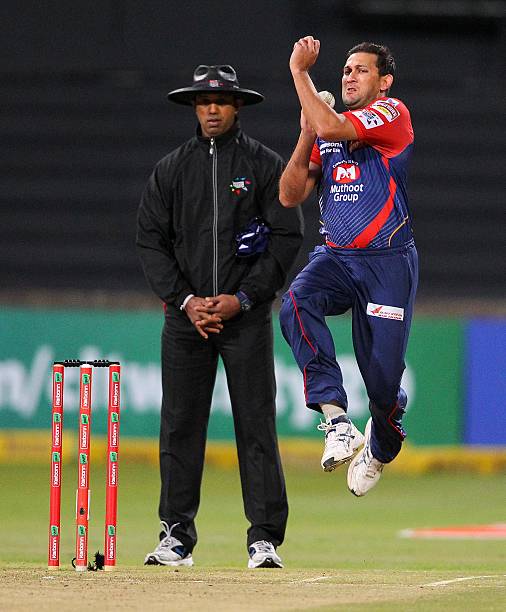
Agarkar's capacity to swing the ball the two different ways, joined with his crude speed, made him a difficult possibility for batsmen. He was known for his red hot spells and his capacity to remove bob from even the flattest of pitches. His expertise in restricted overs designs was especially recognizable, as he routinely kept a decent line and length while likewise making essential leaps forward for his group.
His exhibitions in homegrown cricket were a venturing stone to more noteworthy things. It was his consistency in the homegrown field that prompted his hit up to the Indian public group. Agarkar's obligation to wellness, his enduring hard working attitude, and his capacity to bowl long spells implied he could be a normal component in India's bowling assault for a long time to come.
Ajit Agarkar's worldwide presentation came at 21 years old, during India's visit through Australia in 1998. Agarkar was chosen for the One Day Global (ODI) crew, and his most memorable match was against Australia in Brisbane. The youthful pacer's underlying introduction to global cricket was not without its difficulties, but rather it denoted the start of a vocation that would see him become a critical donor for India.
Agarkar had a quick effect in his presentation series against Australia. His sharp speed and bob stuck out, and he immediately became known for his capacity to bowl in the passing overs in ODIs, frequently confining the resistance's scoring and asserting wickets at urgent points. Agarkar's leading edge execution came around the same time when he took his initial five-wicket pull in ODIs against South Africa in the 1998-99 season.
Notwithstanding some irregularity, Agarkar's initial years were set apart by his determination and his capacity to advance rapidly at the most elevated level. He acquired a standing for being a bowler who could perform well in the restricted overs organization, and he was one of a handful of the pacers who could bowl successfully in the subcontinent's dry and slow circumstances.
In 2000, Agarkar was remembered for the Indian group for the Test series against Zimbabwe, where he made his Test debut. His initial Test vocation was set apart by certain difficulties, as he battled to track down predictable cadence and control in the longest configuration of the game. In any case, over the long run, Agarkar improved, and his job as a center request bowler was recognized, especially in conditions that leaned toward crease and swing bowlers.
Ajit Agarkar's vocation direction during the 2000s was a combination of brightness and misfortunes. He turned into a normal element in India's ODI group during the early piece of the ten years and assumed key parts in a few matches. His flexibility permitted him to play both as a quick bowler and as a lower-request batsman fit for scoring speedy runs when required. Agarkar's commitment with the bat, particularly in the lower center request, procured him the differentiation of being perhaps of the most valuable all-rounder in Indian cricket during that time.
One of his most striking exhibitions came during the 2002 NatWest Series in Britain, where Agarkar assumed an essential part in India's triumph. His commitments with both the bat and the ball were instrumental in India's outcome in that series, and it procured him acknowledgment as a flexible player fit for performing under tension.
In any case, Agarkar's profession was not without challenges. His consistency in the ODI design was frequently addressed, and he was not generally ready to recreate his exhibitions in Tests. While he could produce speed and skip in the more limited arranges, the Test field ended up being more challenging for Agarkar. In any case, he kept on being a significant piece of the Indian group, frequently filling a fundamental job in the bowling assault when India required a bowler who could break organizations or stem the progression of runs.
His best bowling execution in ODIs came in 2004 when he took 6 wickets for 42 goes against South Africa, a presentation that would become one of the features of his profession. His capacity to bowl under tension, take wickets at vital minutes, and contribute with the bat when required made him a fundamental piece of the Indian group.
As India's group developed, Agarkar kept on being an imperative part of the crew, particularly in restricted overs cricket. His consistency in ODI coordinates and capacity to bowl with discipline made him a reliable resource for India. Agarkar was a piece of the Indian group that won the 2007 ICC World Twenty20, assuming a significant part as a bowler who could adjust to the changing organizations of the game.
In the years paving the way to the 2011 ICC Cricket World Cup, Agarkar's job as a senior individual from the group developed. However his Test vocation had begun to slow down, he stayed a central member in the ODI design. His capacity to bowl at the demise and his viability with the ball during powerplays assisted India with staying serious in the more limited configurations of the game. His commitments in the two-sided series and his presence in basic matches made him an important individual from the crew.
When the 2011 World Cup came around, Ajit Agarkar had turned into a more experienced player, yet his global vocation was approaching its end. Because of a blend of wounds, conflicting structure, and the rise of more youthful bowlers, Agarkar was excluded from the crew for the 2011 World Cup. His rejection was an indication of the changing elements in Indian cricket, and it became clear that his time in global cricket was attracting to a nearby.
In 2013, Agarkar authoritatively resigned from all types of worldwide cricket, stopping his 15-year profession. While his retirement was not really that broadly covered of a few different cricketers, it was an impression of his relaxed however unimaginably significant presence in Indian cricket.
Ajit Agarkar may not be pretty much as broadly celebrated as a portion of his peers, yet his commitments to Indian cricket are unquestionable. Throughout his vocation, Agarkar played 26 Tests, 191 One Day Internationals (ODIs), and 24 T20Is, taking in excess of 300 wickets in worldwide cricket. His capacity to convey pivotal forward leaps, frequently in troublesome circumstances, and his job as a lower-request batsman made him perhaps of the most solid all-rounder in Indian cricket during his time.
In ODIs, Agarkar's skill for taking wickets in the center overs, his capacity to bowl in the demise overs, and his consistency made him one of the most misjudged bowlers of his time. He will be associated with his huge hard working attitude, his strength, and his obligation to the Indian cricket crew.
Ajit Agarkar's vocation might not have been loaded up with as much magnificence as a portion of his peers, yet his commitments to Indian cricket have been critical. His steady exhibitions in ODIs, his capacity to adjust to evolving conditions, and his strength despite challenges have procured him a spot in Indian cricket history. Ajit Agarkar's story is one of calm assurance.


Welcome to Cricketkand.com! We are dedicated to providing cricket enthusiasts with the latest news, updates, and insights gathered from top cricket websites around the world. Our goal is to keep you informed about all things cricket, offering up-to-date information from trusted sources including well-known cricket websites, news outlets, and social media platforms.
Cricketkand.com does not directly produce or manage the cricket content featured on our site. All cricket information is curated from various third-party sources that are recognized in the cricket community. We strive to provide accurate and timely content; however, we are not responsible for any errors, omissions, or changes in the information provided by third-party sources.
By using our website, you acknowledge and accept the above terms and conditions. Thank you for visiting Cricketkand.com, and we hope you enjoy staying up-to-date with the world of cricket!
For any inquiries or to raise a complaint, please contact us at officialcricketkand@gmail.com